📄 Digital book in PDF · read it on your phone or print it
For householders, not plumbers: how big your tank should be, what the first flush and the overflow do, why the pump starts at night and how to keep the water clean. One drawing per topic, with the numbers worked out. 65 illustrated pages.
🔒 Secure checkout · PDF by email · 30-day guarantee
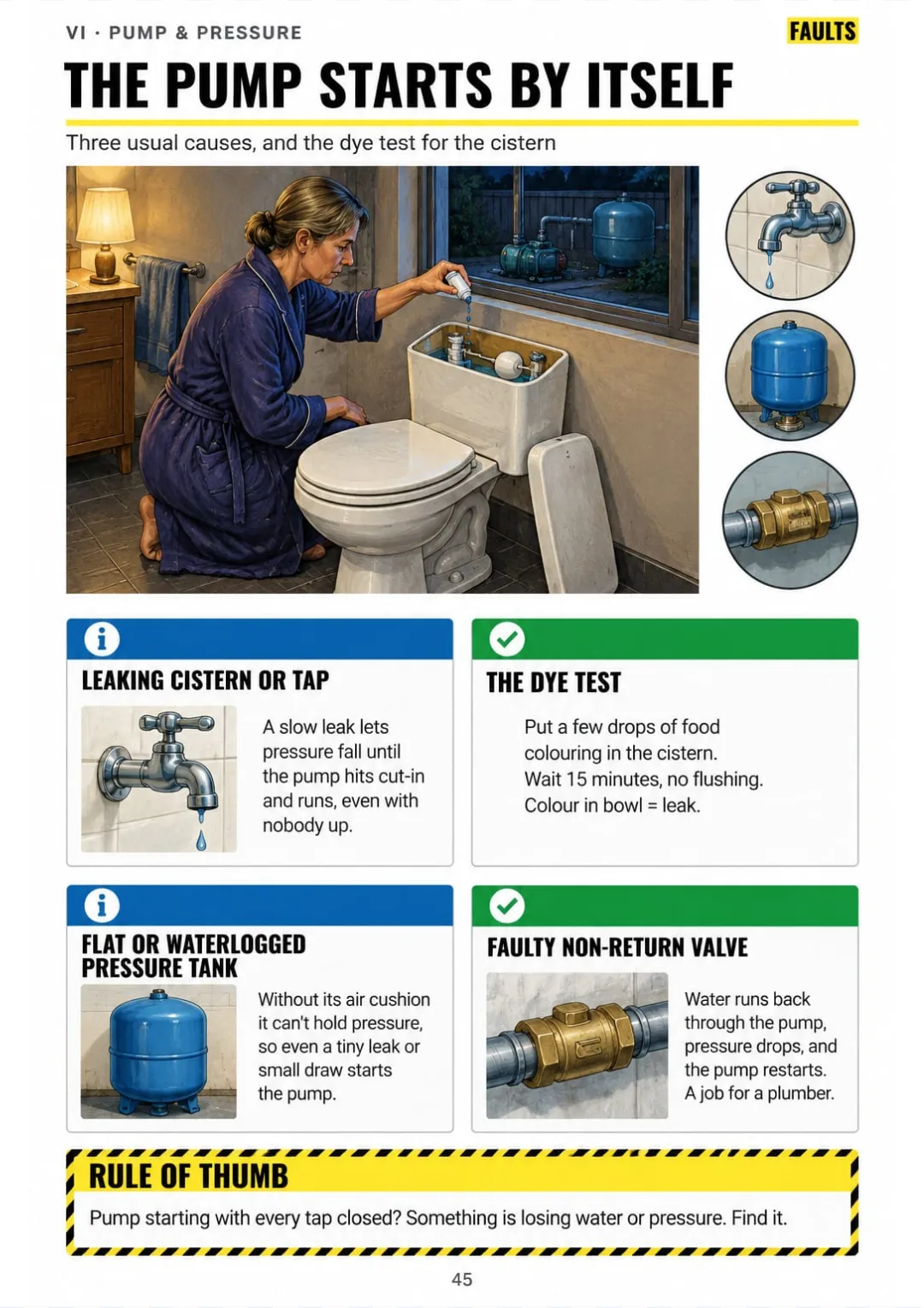
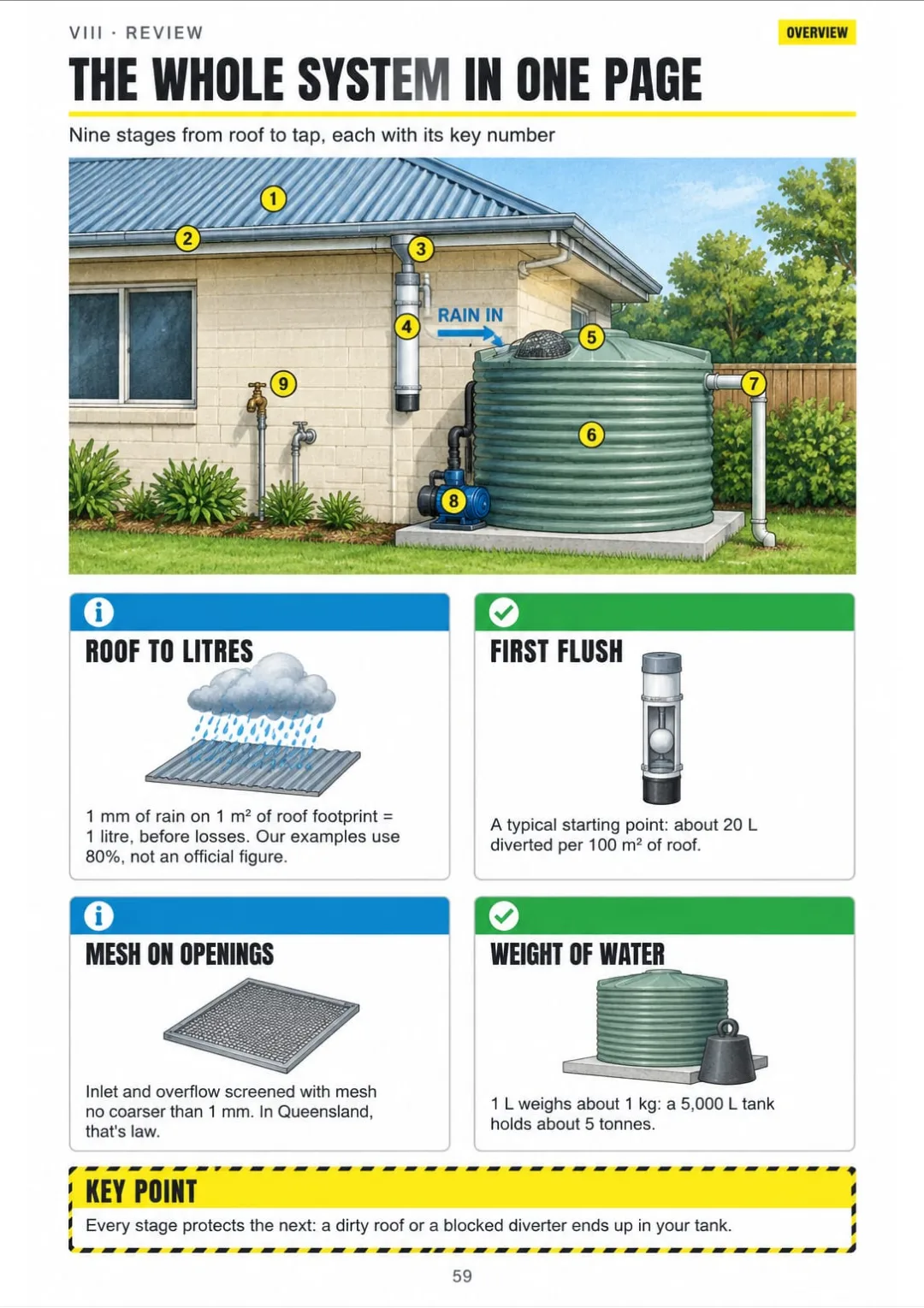
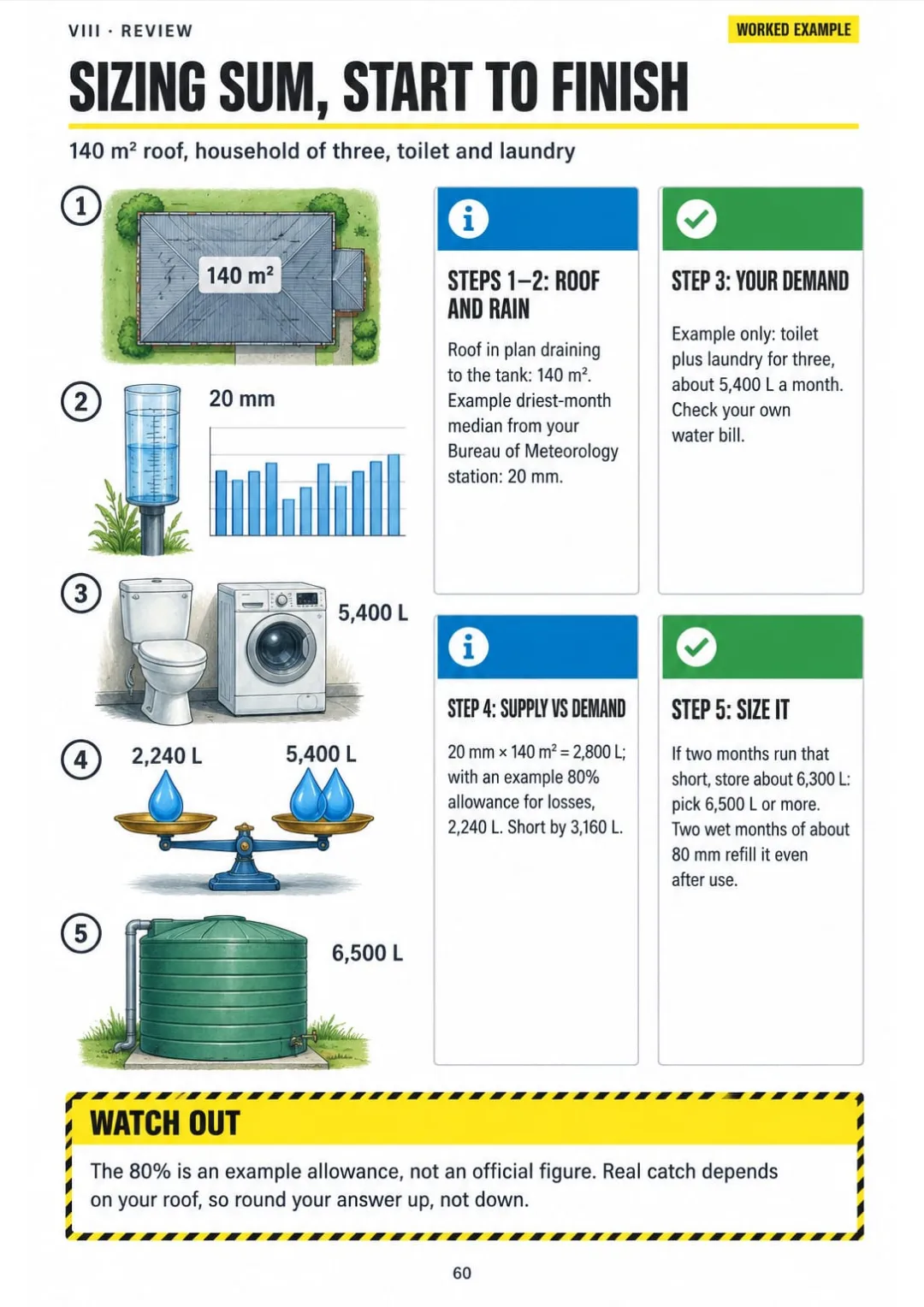
Each page has one large drawing and a box with the numbers and steps you need to know:


Swipe to see more →
These are real pages from the book. The table of contents is the full one: 8 parts and 61 topics.
You're standing by the downpipe after a summer storm, looking at a capped pipe with a small valve at the bottom. You know it's the first flush, but not what it's meant to be doing.
The guide you downloaded explains it in paragraphs: runoff volume, contaminant load, litres diverted per square metre. Words about water you can't see moving.

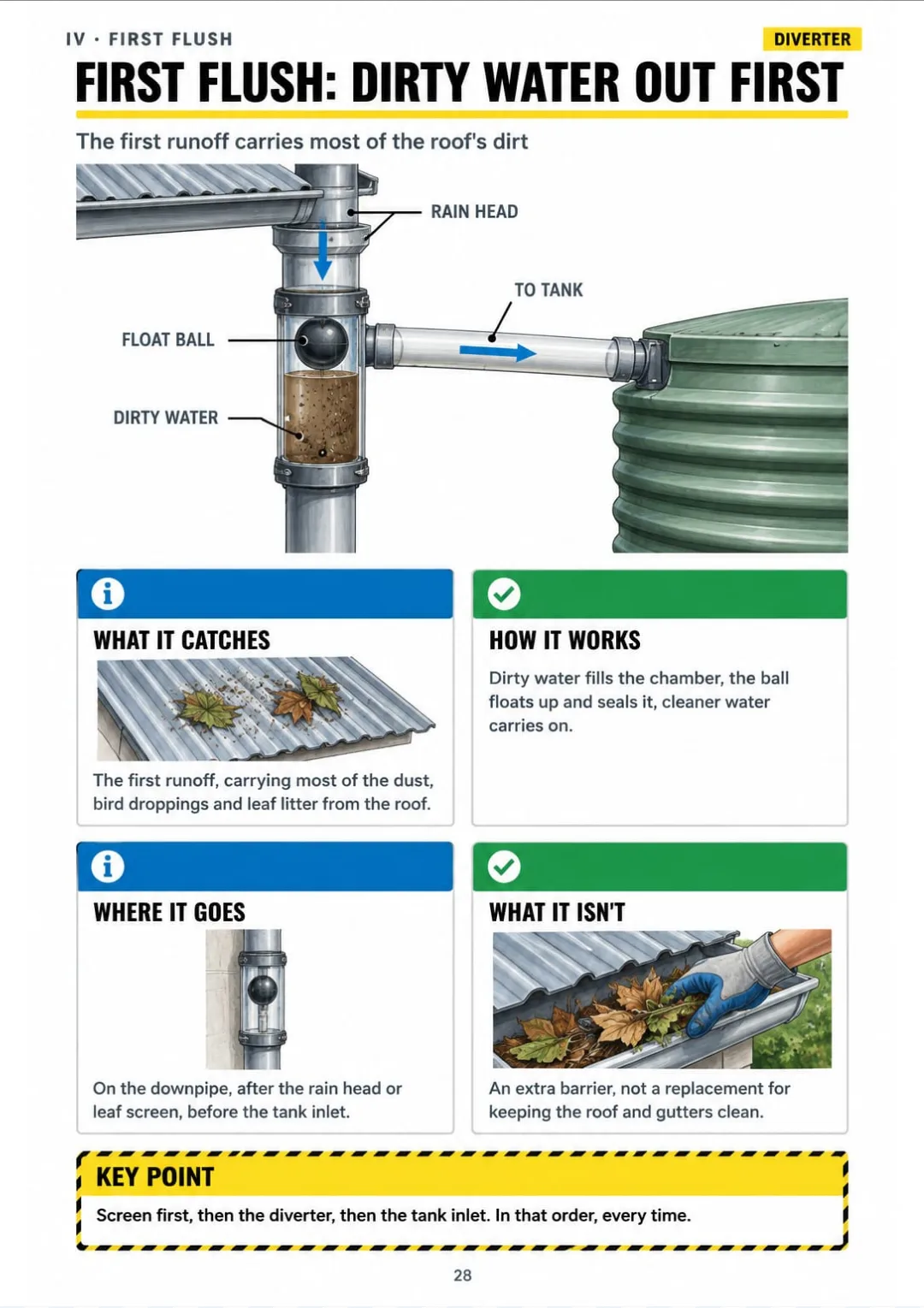
In the book, the first flush is one drawing: the dirtiest first runoff drops into the chamber, and the cleaner water carries on to the screened tank inlet. You can follow the water with your finger.
The same goes for the overflow, the pump's cut-in and cut-out, the sludge check and the tank sizing sum: each one has its own page.
You understand what the diverter does and check it yourself, without going back to the guide, and you know which jobs belong to a licensed plumber.

How the system works, sizing your tank, roof and gutters, first flush and inlet, tank and overflow, pump and mains top-up, care season by season, and review with checklists: 65 pages, all illustrated
Think of it this way:
A storm is forecast for the weekend and you want to know whether the gutters, the first flush and the overflow are ready, before the rain, not after it.
You open the book at the first flush page and see the dirty first runoff dropping into the chamber, the cleaner water going on to the screened inlet, and the slow-release drip that empties it for the next storm.

Same with sizing your tank, the overflow, the pump that starts at night, the sludge check and the maintenance calendar: each one on its own page.
Rainwater Tanks Illustrated is 65 pages in 8 parts, all drawn, and it ends with the whole system on one page, a sizing sum worked from start to finish and checklists for before you call the plumber.
What you see drawn, you don't have to memorize.
The path of a raindrop from roof to tap, the 1 mm on 1 m² = 1 litre sum, why you never catch it all, what rainwater can supply, roof materials, what you can do and what needs a licensed plumber, and how to check your state's rules.
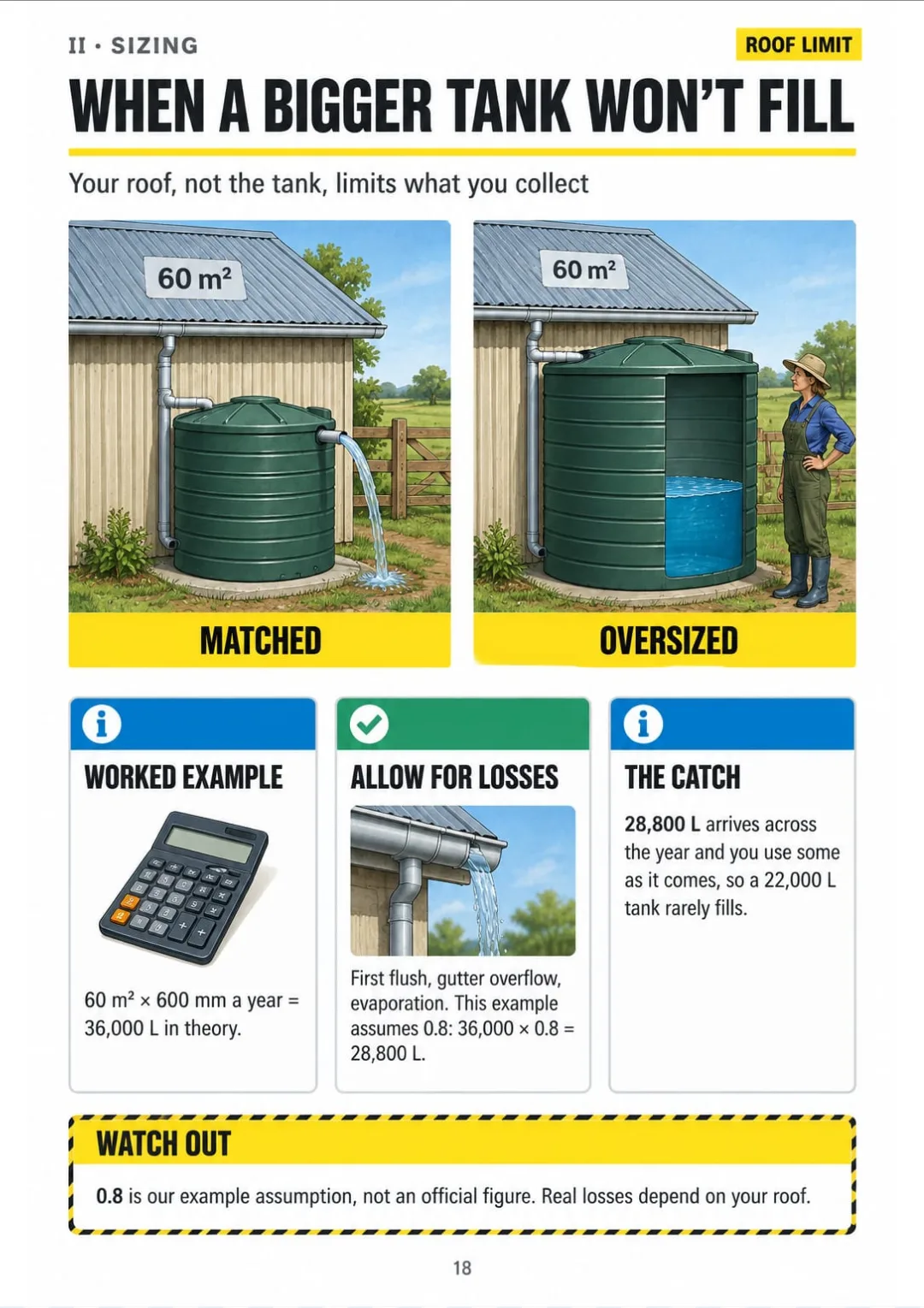
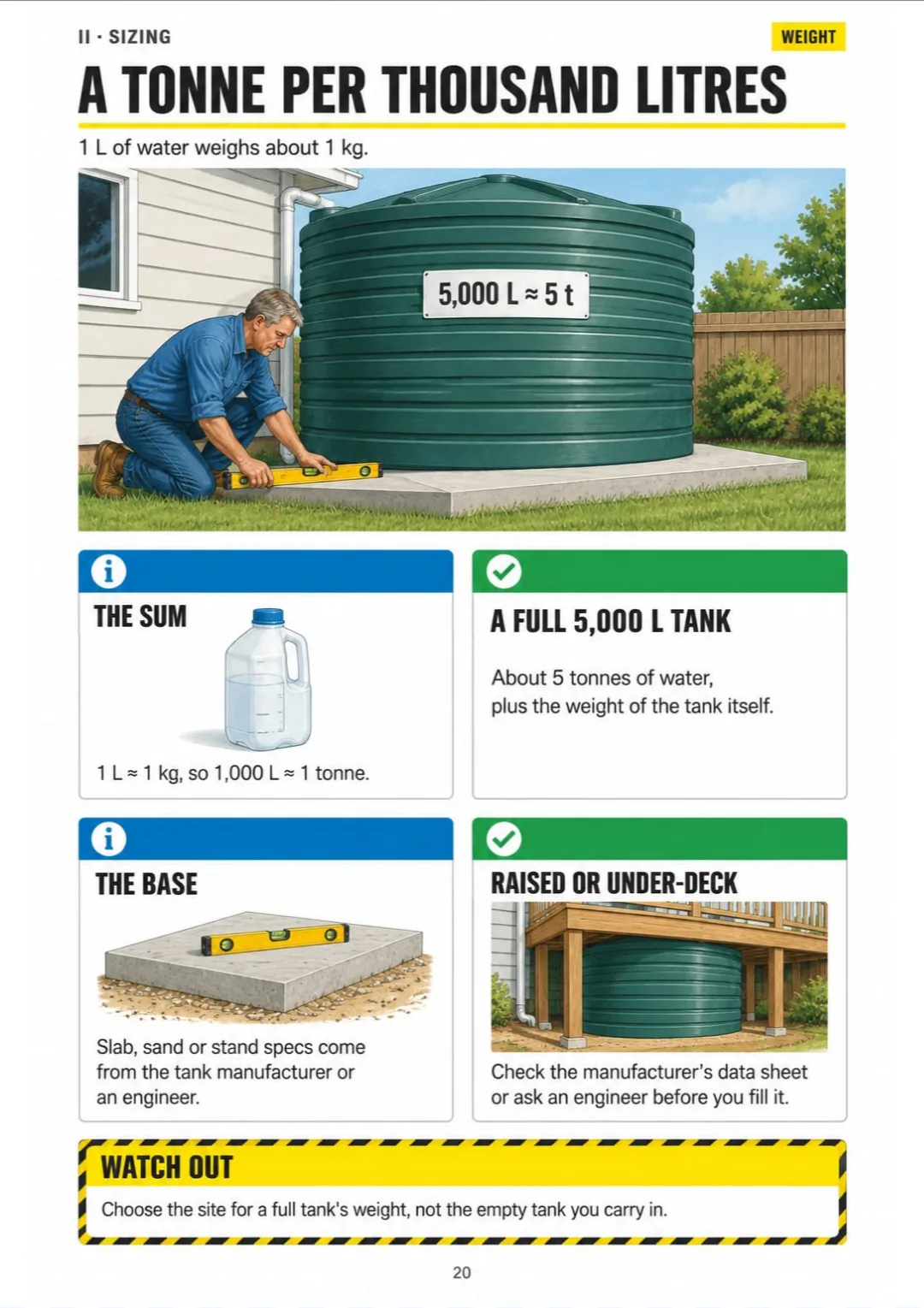
Sizing in 5 steps: roof area, rainfall, your usage, supply vs demand month by month and the dry gap, plus why 5,000 L and 22,000 L can both be right, tanks that won't fill, shapes and materials, and the weight of water.
Gutter fall, size and leaf guards, dry vs wet downpipes, rain heads, which roof goes to which downpipe, trees and bird perches, what shouldn't drain to the tank and gutters in summer storms.
What a first flush diverter does, how big it should be, the slow-release drip, the screened inlet against mosquitoes, the calm inlet and where to draw water from.
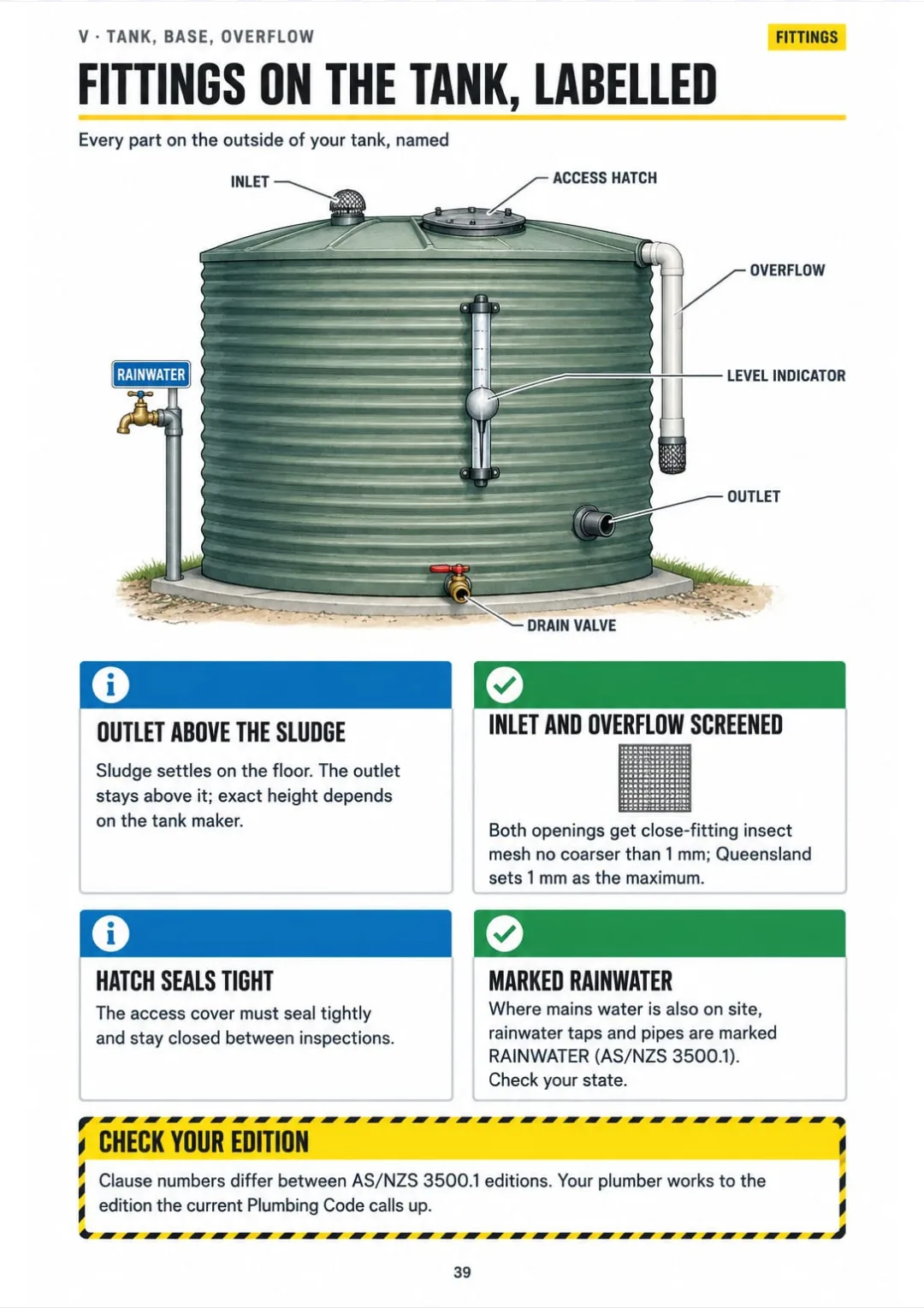
Choosing the spot, slab, sand or stand, where the overflow goes and the mistakes that cause smells, light and algae, every fitting labelled, bushfire-prone areas and under-deck or slimline tanks.
Why most tanks need a pump, pressure switch, controller and pressure tank, cut-in and cut-out, night starts, losing prime, mains top-up vs switch, backflow, pipe colours and signs, and pump noise.
The maintenance calendar at a glance, summer storms, autumn leaf drop, winter and spring checks, measuring sludge, the usual causes of smelly water, finding the mosquito gap and keeping a tank log.
The whole system on one page, the sizing sum worked from start to finish, the most frequent set-up mistakes, your checklist before calling the plumber and a quick check card.
At the end of the book: The whole system on one page, a sizing sum worked start to finish, a maintenance calendar and checklists for before you call the plumber.
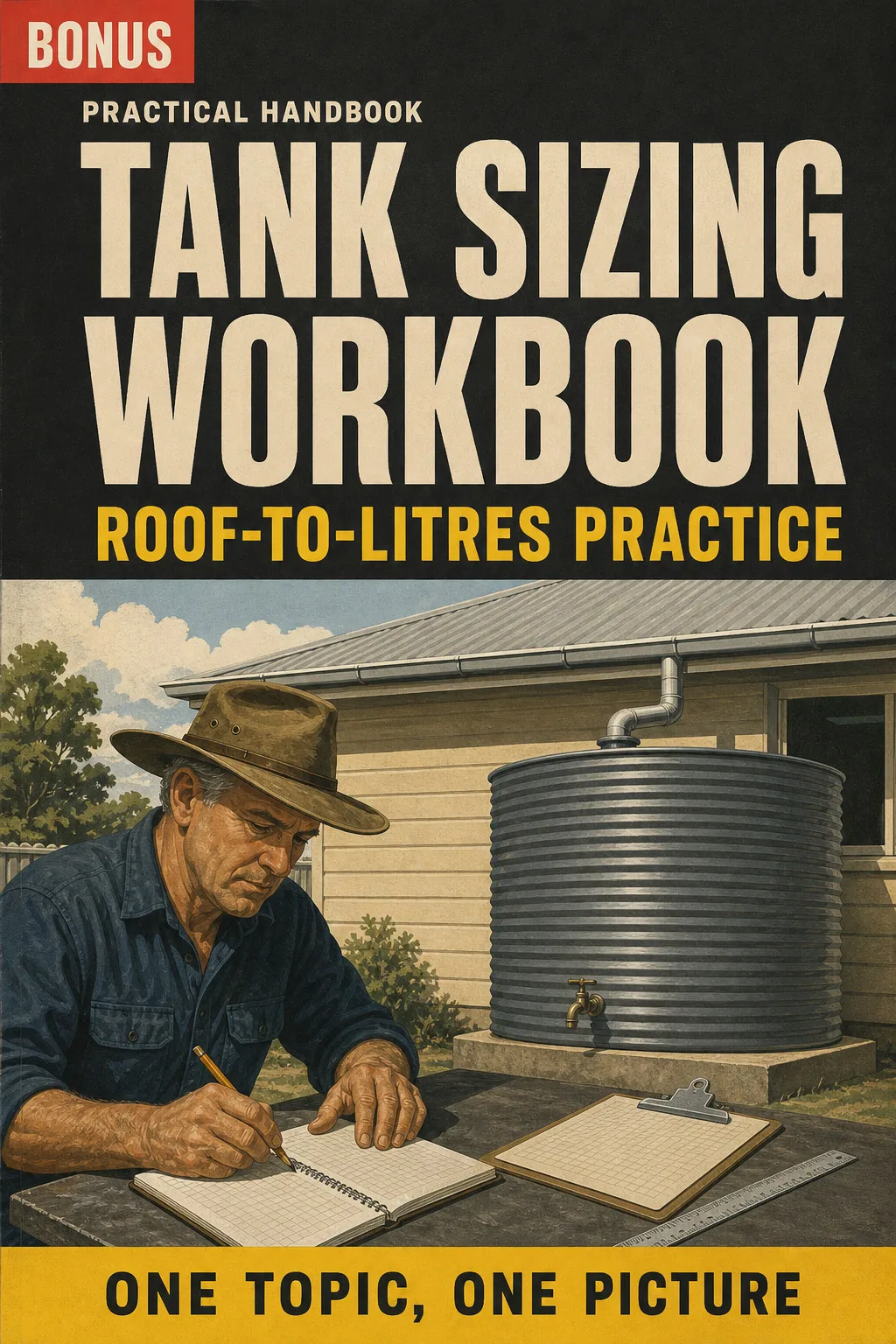

Practise the roof area × rainfall sums with worked examples and blank sheets for your own roof, so you can check any tank size you are offered.

See the set-ups behind smelly water, mosquito wrigglers and a pump that keeps cycling, each mistake drawn next to the correct layout.
📄 This is a digital PDF book sent to your email: nothing is printed or shipped.
PDF by email: We email you Rainwater Tanks Illustrated as a PDF, together with the two free books. It's a single payment: no instalments, no extra charges.
You see every pipe and fitting drawn and labelled, so you know what you've got and what each part does before summer.
You do the roof-to-litres sum yourself, month by month, and check any size the neighbour or the tradie suggests.
You find the cause of the smell, the wrigglers or the night-time pump on one page, and know what to tell a licensed plumber.
📄 This is a digital PDF book sent to your email: nothing is printed or shipped.
Try Rainwater Tanks Illustrated for 30 days, bonus books included.
We refund everything if the file won't open, if the book isn't what you see here, if you were charged twice or if the email doesn't arrive. Just email us.
You pay once. No subscriptions.
Yes. It's written for householders, not tradies: each page is a drawing with a short explanation and the numbers worked out. The sizing, first flush, overflow, pump and maintenance pages work the same everywhere; only the local intervals and rules change. Where rules differ (connections, rebates, approvals), there's a page showing who to ask and what to ask them.
It's checked against the enHealth guidance on rainwater tanks, the Plumbing Code of Australia and AS/NZS 3500, the HB 230 tank handbook and Bureau of Meteorology rainfall data. State rules are only quoted when verified with the regulator.
No. It's an independent illustrated guide. The bodies and standards are named for reference only; the book isn't affiliated with or endorsed by any of them.
No. Mains connections, backflow prevention and pump wiring must be done by a licensed plumber or electrician. The book helps you understand your set-up and explain it clearly. It doesn't say your rainwater is safe to drink: for that, see your state health department or a lab test.
No. It doesn't recommend brands. It shows you what to compare: tank size for your roof and rainfall, materials and shapes, and how pump cut-in, cut-out and pressure tanks work, so you can read a quote and ask the right questions. The workbook sums are written for this book and aren't official material.
The book and the 2 bonus books arrive as a PDF by email, to the address you enter at checkout.
No. It's a one-off payment. No subscription.
Yes. It's a PDF you can print at home or at a print shop, whole or just the pages you want to keep near the tank.
You have 30 days. We refund everything if the file won't open, if the book isn't what you see on this page, if you were charged twice or if the email doesn't arrive: just email us.
No more rereading guides that don't stick.
The first flush, the overflow and the pump: you see them drawn and it clicks.
You talk to your plumber knowing where everything is.
Drawings make studying faster.
The book is right below.
One-time payment: US$ 27 · Guarantee: 30 days · PDF by email
YES, I WANT RAINWATER TANKS ILLUSTRATED FOR US$ 27📄 This is a digital PDF book sent to your email: nothing is printed or shipped.